CRYOTHERAPY
The word ‘cryos’ is of greek origin meaning cold and the word ‘therapy’ means treatment. Thus cryotherapy is treating the patient with the
help of application of cold.
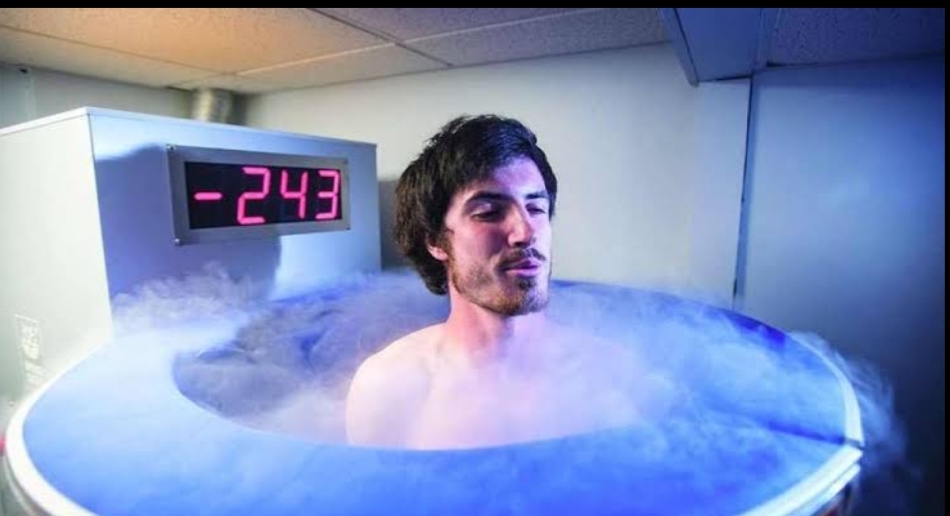
*Cryotherapy is commonly used in the treatment of acute and subacute injury. *cryotherapy is the treatment of pathological lessions by the use of low temperature agents such as ice,frozen gel packs and vapocollant sprays.it has clinical application in therapeutic and diagnostics,so its widely used in rehabilitation and other areas of medicine.it exerts its therapeutic effects by influencing hemodynamic, neuromuscular and metabolic processes.
MECHANISM
The intial vasoconstriction of the superficial vessels is by axon reflex i.e neural phenomena.which causes decrease in lumen of vessels. This
is maintained by post hypothalamus and the vasomotor center of the medulla.
But the vasoconstriction is accompanied by the liberation of histamine like substances which
causes vasodilatation [supervised by neural mechanism]. This vasodilatation washes away
the histamine and thus again vasoconstriction occurs. This is the protective mechanism to
prevent freezing injury.
INDICATIONS
•Reduction of acute pain. •Acute and subacute inflammation. •Acute swelling. •myofacial trigger points. •muscle guarding. • muscles spasm. •Tendinitis. •Tenosynovitis. •Acute ligament sprain. • Acute muscle strain. • Bursitis. • small , Superficial 1st degree burn. •post exercise. •Delayed onset muscle soreness.
CONTRAINDICATION. •Impared circulation. •peripheral vascular disease. •Hypersensitivity to cold. •Skin anesthesia. • Open wound or skin condition(cold whirlpools and contrast baths). •Infection. • Cancerous growth. •Hysteric neuroses. •Hemorrhagic diathesis. • Active pulmonary tuberculosis.
PHYSIOLOGICAL EFFECT OF COLD.1)Haemo-dynamic effect/effect on circulatory system. When cold is applied to the body it causes are initial decrease blood flow due to vaso- construction persists if the duration of the cold application is limited to less than 15-20 min. 2)Neuromuscular effect cold has wide effect in neuromuscular function when applied it reduce the nerve conduction velocity increases the pain threshold,alteus the force generation by muscle and decrease spasticity and facilitates muscles contraction. 3)Neurovascular effect. •Decreases nerve conduction velocity= It has been established that the nerve conduction decreases in proportion to the degree of cooling through decreased nerve conduction velocity has been documented with 5 minute application of cold. After 15 min of cooling it take about 30 min or longer to recover cold can decreases the vol.of conduction in both sensory as well as motor nerve and has a greater effect on myelinated and small diameter fibres than reversible total nerve conduction block also occur of ice is applied over nerve trumps where it is superficial.
*METHOD OF APPLICATION
1)Ice massage-(alternatives:US\deep
kneading\electric stimulation\and lasers)Common areas found around cervical spine.
Shoulder girdle and low back.faulty posture and poor mechanics contribute it.Cryotherapy with
appropriate exercize program to be used the stroking of ice on body part can be performed by:_
a)Ice frozen in a plastic insulated cup, the upper part of which is out (best material used is (slyiofoam) to about 1 inch from the bottom.
b)lollipop with a tongue depression frozen in middle known as popsicle
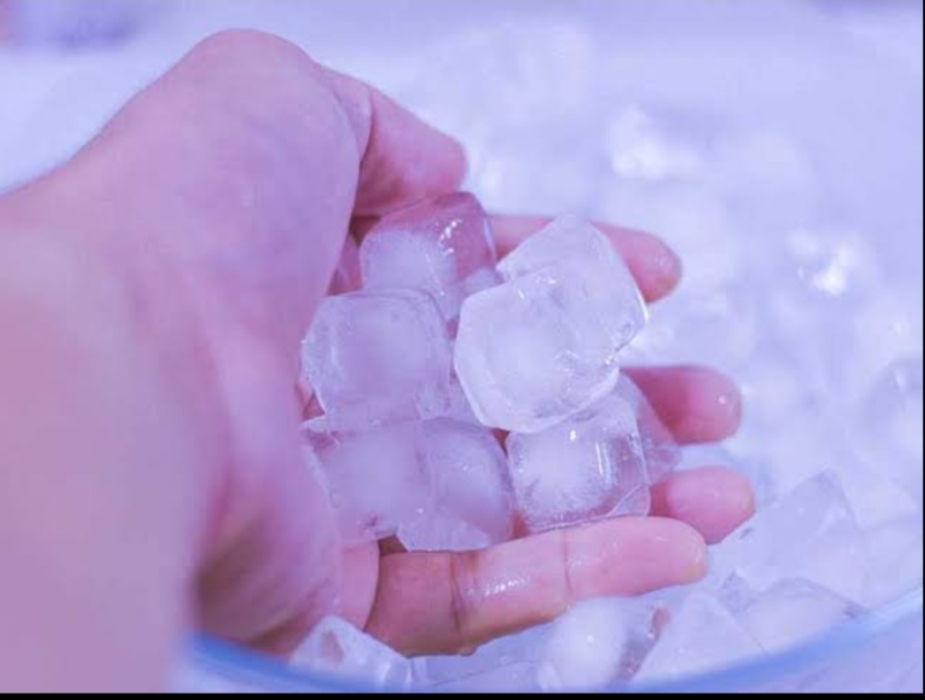
c)Ice cube held in a towel.(round off the ends)method-
a)circular smooth rhythmical strokes over treatment area reducing size of circle as massage proceeds.water should be removed( from melting ice)with extra towels.bumping of bony prominence causes discomfort so should be avoided. B)longitudinal covering half of the next stroke that is one and half stroke.
Duration – To anesthesize the area 3-10 mins are required (though is dependent upon directly proportional to the size of the part, amount of fat , depth of the part) . 2-3 mins
around the pressure sore. Repeated 3-4 times.
Advantages:
Anesthezises in short time.
Small areas can be treated.
Easy to do.
Disadvantages:
Water drops Slightly more uncontorable than cold packs.
Cold packs
Three types-commercial
-chemical mixtures
-home made
A)commercial packs- silica gel or putty in a durable (plastic) pack.or sandy slury mixture.
2)polyvinyl alcohol in solution of sodium borate
3)petroleum distillate
Needs to refrigerated at 12 to 9 degree for first time for 24 hours and can be used for 20 mins.
It can be reused after 30 mins of refrigeration.
B)chemical mixtures- ideal for onfield use in a spirit event or emergency(can be used once only)
C)home made –frozen veg (peas are ideal for packs)
-frozen sanitary napkin
Method- place in a well wrung out of towel or some use a dry towel (avoid irritation and maintain hygiene)
Note- a mat or another thick towel/blanket should cover the superior surface prevents evaporation thus warming up from the ambient
air.
Check skin after 5 mins,if bluish remove it.
Advantages-easy to use/reapplyable
-Onfield uses/moulds to contours
can be used for ice repulsive subject
Disadvantages-less intense cold
-30 min gap before reuse
4)Ice towels-terry cloth towels and a ice bucket(containing shaved or crushed ice )is used. Ice shaving is caught in the nap of the towel.
Method-65percent water and 35% ice( crushed or shaved) mixed in a bucket. Towels are wrung out and applied to the part because ice shavings melt quickly towels needs to be changed every 30 secs to 2 mins .5-6 towels are initially dipped in the ice much.
Duration-10-15mins
Advantages-
moulds to body contour more even cooling chances of overcooling minimal can simultaneously exercise and elevate the part
Disadvantages
towels need to kept on changing therapist is not free wets the floor
multiple towels get wet.
5)ice packs-plastic bags with crushed /shaved ice
Method- bag is seated or tired and with a similar technique as with cold pack is used in application but the part should be applied (prior) with oil and a gutter can be made to drain off excess water.
Duration-5-15mins but for deeper muscles 20-
40 mins
Advantage-
Easily mouldable
More colder than cold pack
No special equipments required
Disadvantages-
Can cause frost bites
More tedious to apply.
CLASSIFICATION OF COLD INJURIES
1 degree damage-tissue appears red,inflamed with mild oedema
2degree damage-marked oedema,blisters or both
3degree damage-necrosis with a blue grey colour with formation of ice crystals
4 degree damage-gangrene and neurological complications Redness to application of ice-
O2 does not dissociate from Hb freely at lower temperatures,thus the veins have more oxygenated blood giving red colour to skin.
later on its due to reactive hyperemia which occurs 10-15mins after ice use.
Ice burns are painful red blotches which are uncomfortable and remain so for 3 days.
More severe injury i.e tenderness and thickening of subcutaneous tissue due to fat necrosis and persist for 3 weeks.
Treatment- rest and analgesics.
 Dr Lucky Raman